Newt Notes: How to Turn Your Kid Into a Pint-Sized Field Scientist (No Lab Coat Required)
Somewhere between "Mom, why is Gerald just STARING at that rock?" and "I think Gerald might be plotting something," your kid stumbled onto the single most important skill in all of science: paying attention.
Not the sit-still-and-listen-to-a-lecture kind of attention. The wild-eyed, crouching-next-to-a-tank-for-twenty-minutes, whispering-observations-under-their-breath kind. The kind that made Charles Darwin famous and that currently has your child convinced their newt has a secret personality and possibly a five-year plan.
Here's the thing: they're not wrong to look that closely. And with just a few playful nudges, that natural curiosity can blossom into genuine naturalist skills — the same ones real scientists use in the field. No boring worksheets. No lab coats. Just a newt, a notebook, and a kid who is absolutely ready to take this very seriously.
Step One: Build the World's Most Ridiculous (and Effective) Observation Kit
Forget the plastic microscope gathering dust in the closet. A real newt detective kit is assembled from the stuff already rattling around your junk drawer, plus one or two genuinely useful additions.
Here's what goes in the kit:
A dedicated field journal. This is non-negotiable and also the most important object in the whole operation. It doesn't need to be fancy — a spiral notebook from the dollar bin works perfectly. The key is that it belongs entirely to your kid, and whatever goes in it is official scientific data. Label the cover together. Make it feel important, because it is.
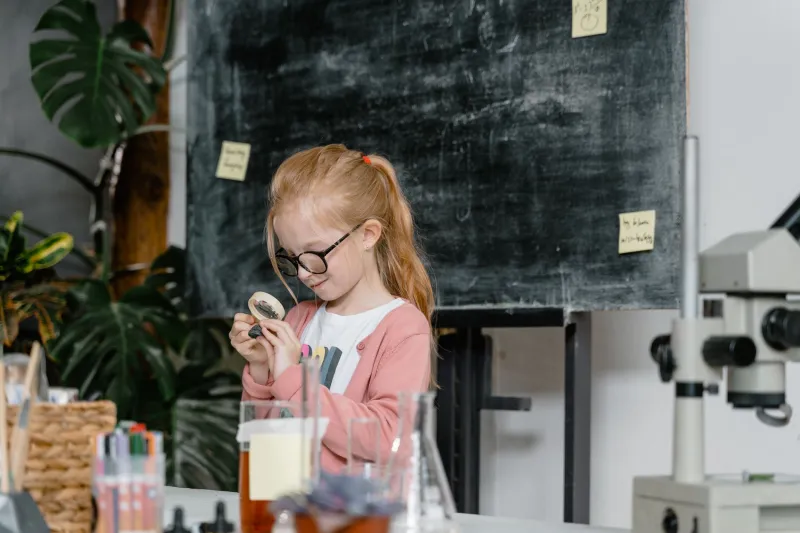
A magnifying glass. Yes, the kind that looks like a prop from a 1920s detective movie. Newts have genuinely fascinating textures, color patterns, and tiny features that reward close inspection. A basic magnifying glass from any craft store turns a casual glance into a full investigation.
Colored pencils or markers. Real field naturalists draw what they see. Audubon did it. Darwin did it. Your kid can do it too, and their drawing of Gerald mid-yawn will be significantly more expressive than anything in a textbook.
A small ruler. Measuring things makes kids feel extraordinarily scientific. Length of the newt, depth of the water, distance between the rock and the hiding spot — all of it counts.
A timestamp system. This can be as simple as writing the time at the top of each entry. When kids start connecting time to behavior (Gerald always hides at 4 PM, Gerald gets active right after feeding), they're doing real chronobiology. Casually mention that to them and watch their faces.
Step Two: Teach the Art of the Observation Entry
Scientific journals aren't diaries, but they're not boring checklists either. The sweet spot for kids is somewhere in between: structured enough to build habits, loose enough to stay fun.
A good newt observation entry covers four things:
- What the newt is doing — Be specific. Not "swimming around" but "swimming in tight circles near the left corner of the tank, then stopping to look at the filter."
- What the newt looks like right now — Color can shift slightly with temperature and mood. Posture matters. Is Gerald puffed up? Flat? Doing that weird thing with his back legs?
- What the conditions are — Time of day, whether the light is on or off, what the room temperature feels like, whether anyone was just making noise nearby.
- What the kid thinks is happening — This is the hypothesis zone. Wild theories are not just allowed, they are encouraged. "I think Gerald is mad because we moved his rock" is a legitimate scientific hypothesis that can actually be tested over time.
That last part is where the magic lives. When kids are allowed to guess out loud — really commit to a theory — they start watching for evidence. That's the entire scientific method, dressed up in newt pajamas.
Step Three: Introduce the Weekly Mystery
Every great scientist needs a question to chase. Every week, help your kid pick one specific thing to investigate about their newt. Keep it small and answerable.
Some classics to get you started:
- Does Gerald eat more in the morning or the evening?
- Which hiding spot does Gerald use most often, and does it change?
- How long does Gerald usually stay at the surface before going back down?
- Does Gerald react differently to different people approaching the tank?
Write the question at the top of a fresh journal page on Monday. By Friday, your kid has five days of data and an actual answer. Celebrate the answer — even if it's "we still don't know" — because that's also a real scientific result.
Bonus points if you help them make a simple chart or tally system. The moment a kid draws their first hand-made bar graph about newt behavior, something shifts. They're not just watching a pet anymore. They're doing science.
Step Four: Connect Gerald to the Bigger World
One of the sneaky superpowers of newt ownership is that it gives kids a living, breathing entry point into ecology, biology, and environmental science. Once they're hooked on observing one small creature, the whole natural world starts to look more interesting.
Point out that the Eastern newt (the species many US families keep) lives wild in forests from Florida all the way up to Canada. Show them pictures of the red eft stage — that brilliant orange land phase that looks like something out of a fantasy novel. Mention that newts can regenerate lost limbs, which is the kind of fact that makes a kid's brain absolutely short-circuit in the best possible way.
Suddenly Gerald isn't just a pet. Gerald is a representative of an ancient, resilient lineage of creatures that have been navigating ponds and forest floors for millions of years. Gerald has ancestors. Gerald has a wild counterpart somewhere in the Appalachian woods right now, doing newt things.
Your kid's observation journal is, in a very real sense, part of a much longer story.
Step Five: Share the Data (It Counts)
Real scientists share their findings, and your kid's newt notes deserve an audience. This doesn't mean submitting to a peer-reviewed journal — although honestly, give it ten years. It means reading entries out loud at dinner, taping the best observation drawings to the fridge, or narrating recent discoveries to a sibling, grandparent, or very patient family dog.
If your family wants to go a step further, citizen science programs like iNaturalist (available free in the US) let kids log real wildlife observations that contribute to actual scientific databases. Even a backyard salamander sighting counts. The app makes it feel like a video game. The data is genuinely useful. It's one of those rare win-wins that makes a parent feel like a genius.
The Whole Point Is Already Happening
Here's the secret buried inside all of this: your kid is probably already doing most of it. They're already watching. Already theorizing. Already convinced that Gerald has opinions and preferences and possibly a rivalry with the decorative pebble on the left side of the tank.
All you're doing is handing them a notebook and telling them that what they're doing has a name. It's called observation. It's called inquiry. It's called science — and it has always looked a lot less like a lab coat and a lot more like a kid, nose pressed to a tank, whispering, "I see you, Gerald. I see exactly what you're doing."