Scales, Slime, and Superpowers: The Science Behind Why Your Kid's Newt Might Actually Be Invincible
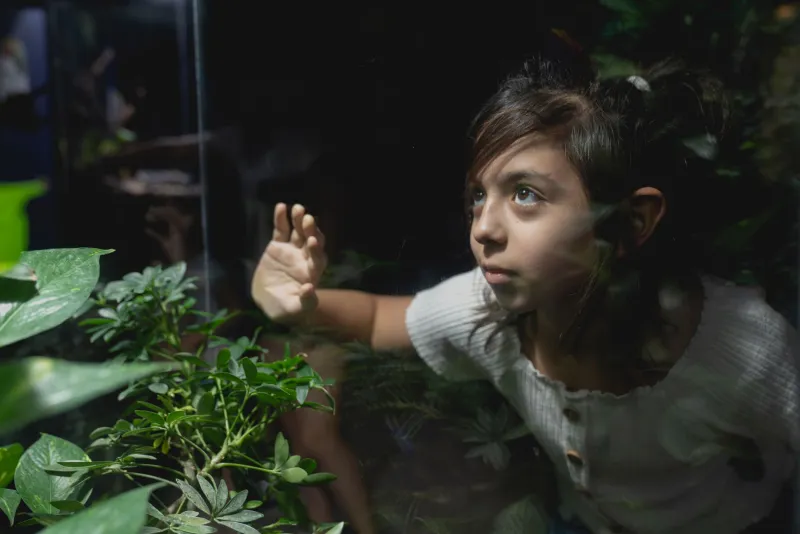
It starts with a very serious announcement at the dinner table.
"Mom. Dad. Gerald is a superhero."
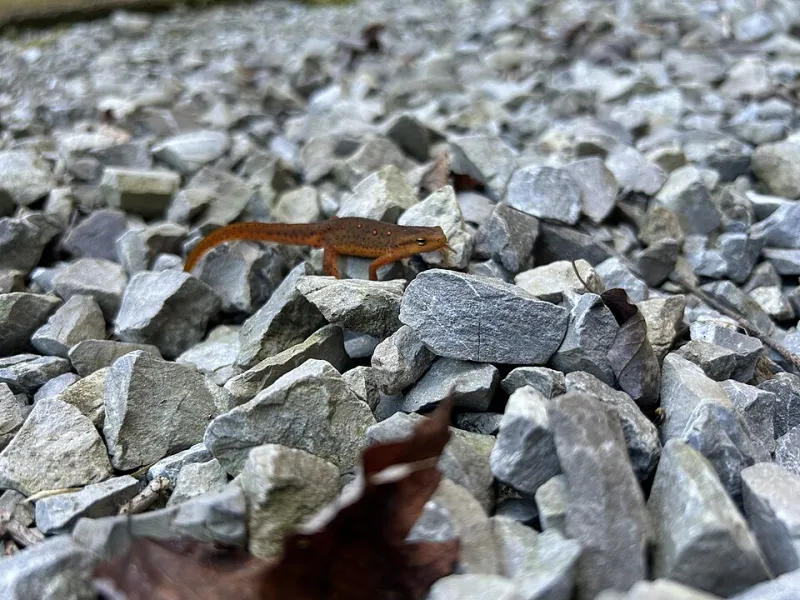
Gerald, for context, is a three-inch Eastern newt currently residing in a ten-gallon tank next to the Legos. He has not saved any cities. He has not worn a cape. He has, however, spent the last forty minutes staring at the thermometer on the side of his tank with the focused intensity of someone defusing a bomb.
And here's the thing — your kid might not be wrong.
Before you chalk it up to an overactive imagination fueled by too many Saturday morning cartoons, consider this: newts are genuinely, provably, scientifically remarkable. They don't just seem superheroic to a seven-year-old. They are superheroic by almost any reasonable biological standard. The only difference between a newt and a comic book character is that the newt's abilities are real, repeatable, and peer-reviewed.
So let's settle the great amphibian debate once and for all — with actual science, a healthy dose of wonder, and maybe a little vindication for your kid.
The Regeneration Thing Is Real, and It's Genuinely Bonkers
Let's start with the big one, because if your child has done even five minutes of newt research (or watched you google it in a panic after Gerald's tail went missing), they already know: newts can regrow lost limbs.
Not metaphorically. Not approximately. Actually regrow them. Legs, tails, parts of their heart, portions of their eyes — even sections of their spinal cord. Scientists have been studying this for decades and are still not entirely sure how to replicate it in humans. Meanwhile, Gerald is over there in his tank basically shrugging about the whole thing.
This process, called epimorphic regeneration, involves specialized cells called blastemal cells that essentially "remember" what used to be there and rebuild it from scratch. It's the biological equivalent of your kid losing a Lego piece and the universe just... making a new one. Perfectly sized. Perfectly shaped. Good as new.
For a young observer, watching a newt regrow a tail isn't just cool — it's a gateway question. How does it know what to grow back? Does it hurt? Could people ever do that? These are not silly questions. These are the exact questions researchers at institutions like Harvard and the Max Planck Institute are actively trying to answer. Your kid is basically thinking like a scientist already.
Navigation Skills That Would Make a GPS Jealous
Here's a lesser-known newt superpower that tends to absolutely delight kids once they hear about it: newts can navigate using the Earth's magnetic field.
Yep. Gerald has a built-in compass.
Research has shown that certain newt species, particularly the red-spotted newt common across much of the eastern United States, can detect magnetic north and use it to orient themselves — even when other environmental cues are removed. They migrate back to the same ponds year after year with an accuracy that would impress a seasoned hiker with a trail map and a fully charged phone.
Some studies suggest they may also use celestial cues — the position of the sun and stars — to supplement their magnetic sense. Which means your newt might be navigating by starlight. In a tank. Next to the Legos.
Tell that to your kid and watch their brain quietly explode.
The Poison Plot Twist
Okay, this one requires a quick parental disclaimer: please do not let your child lick the newt. That said, the reason why you shouldn't is genuinely fascinating.
Many newt species produce neurotoxins as a defense mechanism. The rough-skinned newt of the Pacific Northwest, for instance, carries tetrodotoxin — the same toxin found in pufferfish — in concentrations potent enough to deter most predators. Some populations of garter snakes have actually evolved resistance to this toxin over generations, leading to an ongoing evolutionary arms race between predator and prey that plays out in backyards from California to Oregon.
For younger kids, this can be simplified beautifully: the newt has an invisible force field. It's not wrong. It's just chemistry.
For older kids who are ready for more, this is a perfect entry point into conversations about evolution, natural selection, and why the natural world is basically one long, slow, extremely dramatic action movie.
Why Newt Ownership Might Be the Best Unplanned Science Class You Ever Signed Up For
Here's where the parenting angle gets interesting, because this isn't just about validating your child's enthusiasm for Gerald. It's about recognizing what that enthusiasm is actually doing.
Studies on early childhood science engagement consistently show that hands-on exposure to living creatures — observing them, caring for them, asking questions about them — builds the kind of curiosity and patience that formal classroom learning struggles to manufacture. A kid who spends time watching a newt isn't just having fun. They're learning to observe carefully, to notice changes, to form hypotheses ("Why does Gerald always hide behind the rock at 3pm?") and test them informally.
They're also learning that the world is weirder and more wonderful than it first appears. That the small, overlooked, slightly slimy thing in the corner might actually be the most interesting thing in the room.
That's not a bad lesson. That's, arguably, the whole lesson.
Talking Points to Fuel the Fire (Without Actually Doing Their Science Fair Project for Them)
If you want to keep the magic going without spending your entire Sunday on Wikipedia, here are a few conversation starters that tend to send imaginative kids into orbit:
- "What do you think Gerald dreams about?" (Newts do exhibit sleep-like states. Science is still figuring out the rest.)
- "If you could regrow any body part, which one would you pick?" (This one gets philosophical fast.)
- "Gerald can feel the Earth's magnetic field. What do you think that feels like?" (No one knows. That's the point.)
- "What superpower do YOU have that nobody's noticed yet?" (Because the best newt conversations always circle back to the kid.)
The Verdict
So is Gerald a superhero? Technically, he is a semi-aquatic vertebrate of the order Urodela with documented regenerative capabilities, magnetoreception, and chemical defense mechanisms that have baffled evolutionary biologists for years.
But also? Yeah. He's a superhero.
Your kid saw it first. Science just took a little longer to catch up.