Ditch the Screen, Meet the Newt: How a Slimy Little Amphibian Is Outsmarting Every App on Your Kid's iPad
Let's paint a picture. It's a Tuesday evening. Your kid has been glued to a tablet for approximately the same number of hours as a transatlantic flight. You've tried suggesting outdoor time. You've floated the idea of board games. You've even, in a moment of desperation, suggested they "go look at some clouds." Nothing works.
And then, somehow, a newt enters the picture.
Within forty-eight hours, that same child is researching water pH levels, debating the merits of live versus frozen bloodworms, and explaining the nitrogen cycle to your mildly confused golden retriever. Welcome to what parents across the country are quietly calling the Newt Effect — and it is absolutely as magical as it sounds.
Why Newts, and Why Now?
We are living in peak screen saturation for kids. According to the American Academy of Pediatrics, children between the ages of eight and twelve spend an average of nearly five hours a day on screens for entertainment alone. That number climbs even higher for teenagers. And while apps and games are engineered by entire teams of brilliant people specifically to keep eyeballs locked in, they can't do something a newt does effortlessly: be genuinely, unpredictably alive.
Newts don't have algorithms. They don't send push notifications. They won't auto-play the next episode. What they will do is hide under a rock for three days, then suddenly swim laps at 11 p.m. for no apparent reason, leaving your child completely baffled and desperate to figure out why. That mystery? That's the secret weapon.
Curiosity is the original engagement mechanic, and newts have been running it successfully for about 370 million years.
The Low-Maintenance Myth (and the Beautiful Reality)
One of the first things parents notice when researching newts is that they're often labeled "low-maintenance pets." And compared to, say, a golden retriever or a horse, sure — they are. But here's the thing nobody tells you upfront: low-maintenance doesn't mean no-maintenance, and that distinction is exactly where the magic lives.
Keeping a newt healthy requires a kid to actually pay attention. The tank temperature needs to stay in a specific range. The water has to be dechlorinated — tap water straight from the faucet can harm them. The habitat needs both aquatic and land areas if you've got an Eastern newt in its terrestrial red eft stage. Feeding schedules matter. Water quality matters.
None of this is overwhelming. But all of it is real. And real responsibility, even in small doses, does something to a kid that no chore chart or educational app has ever quite managed: it makes them feel genuinely needed by another living creature.
That's not a small thing. That's actually enormous.
Science Class Just Moved Into Your Living Room
Here's where things get genuinely exciting for parents who are tired of watching their kids passively consume content. Caring for a newt is, without exaggeration, a live-action biology curriculum.
Take the Eastern spotted newt, one of the most common pet newts in the US. This little creature goes through three distinct life stages — aquatic larva, terrestrial red eft, and aquatic adult — each requiring different care conditions. Understanding those stages means your kid is learning about metamorphosis, habitat adaptation, and biological life cycles. Not from a worksheet. From watching it happen in a tank on their dresser.
Want to go deeper? Newts are amphibians, which means they absorb water and oxygen directly through their skin. That single fact opens doors to conversations about osmosis, environmental toxins, and why water quality matters so much — both in the tank and in the world outside. Suddenly, a news story about watershed pollution isn't abstract. It's personal. It's about their newt.
And the regeneration thing? The fact that newts can regrow lost limbs, portions of their hearts, and even parts of their eyes? That's not just cool — that's the kind of biological phenomenon that sends curious kids spiraling into research rabbit holes that actually teach them something.
Screen Time Versus Newt Time: A Completely Unscientific But Totally Accurate Comparison
Let's be honest about what we're really comparing here.
A gaming app gives a child dopamine hits on a schedule engineered by a team of behavioral psychologists. A newt gives a child the slow, satisfying reward of noticing that their pet is finally eating again after a week of hunger strikes, and feeling the specific pride of knowing they figured out why (the water was two degrees too cold, as it turns out).
One of those experiences is designed to be addictive. The other one accidentally teaches patience, observation, and problem-solving while your kid is busy just thinking it's cool.
We're not saying throw the iPad in the trash. We're saying that forty-five minutes of newt-watching and tank maintenance does something different to a kid's brain than forty-five minutes of passive scrolling — and that difference is worth paying attention to.
Getting Started Without Losing Your Mind
If the Newt Effect has got you curious, here's the good news: starting small is genuinely an option. A basic aquatic newt setup doesn't require a huge investment or a degree in herpetology. A ten-gallon tank, a simple filtration system, some aquatic plants, a smooth rock or two, and a lid that actually stays closed (newts are escape artists of the highest order — ask anyone) will get you started.
The Eastern newt and the fire-bellied newt are both popular choices for beginners in the US, and both are widely available through reputable reptile and amphibian specialty stores or responsible breeders. Skip the big-box pet store when you can — specialty shops are more likely to give you accurate care information and healthy animals.
And here's a pro tip from the Crewcut & Newt archives: let your kid own the research process before the newt even arrives. Give them a week to figure out the setup requirements themselves. Watch what happens. Nine times out of ten, you'll find them deep in forums, YouTube care videos, and library books, completely self-directed, learning more in that week than they would in a month of assigned homework.
The Smallest Zookeeper in the House
There's something quietly profound about a child who has learned to be responsible for a creature that can't ask for help. A newt can't bark when it's hungry or meow when the water's dirty. It just... waits. And a kid who learns to notice the subtle signs — the sluggish movement, the refused food, the cloudy water — is developing a kind of attentiveness that no app can teach.
The Newt Effect, at its core, isn't really about newts at all. It's about what happens when a kid encounters something genuinely alive and genuinely dependent, and rises to meet it.
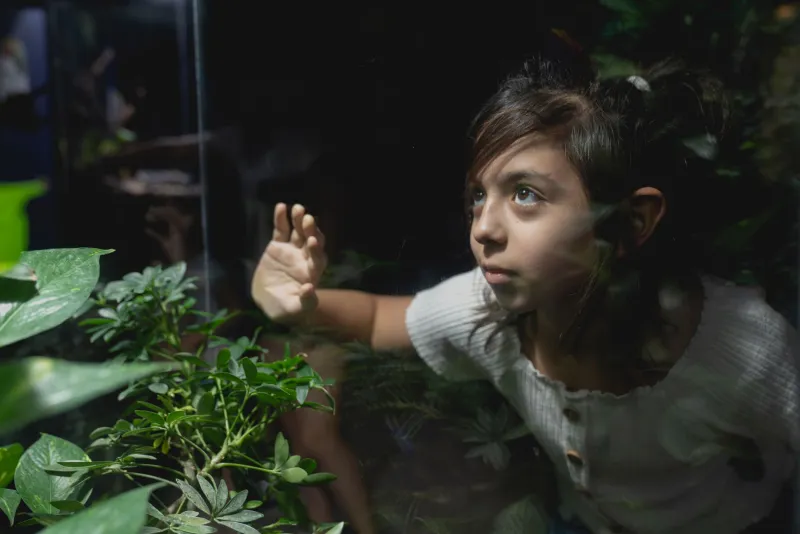
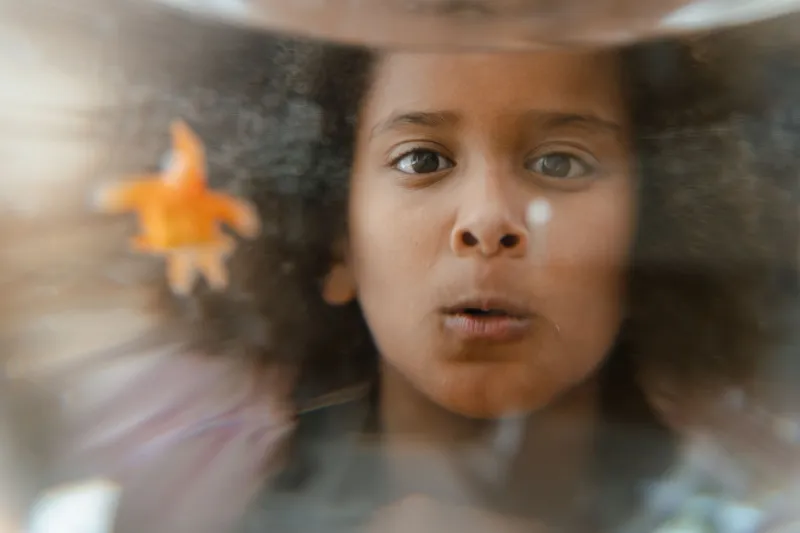
It's about the moment the screen goes dark and the tank light comes on, and your child leans in close to watch their weird, slimy, magnificent little pet do absolutely nothing — and finds it more interesting than anything the internet had to offer.
Honestly? Same, kid. Same.